Water Damage Questions, Answered Simply
Request an estimate when you are ready
Questions and answers
What happens first when a provider arrives for water damage?
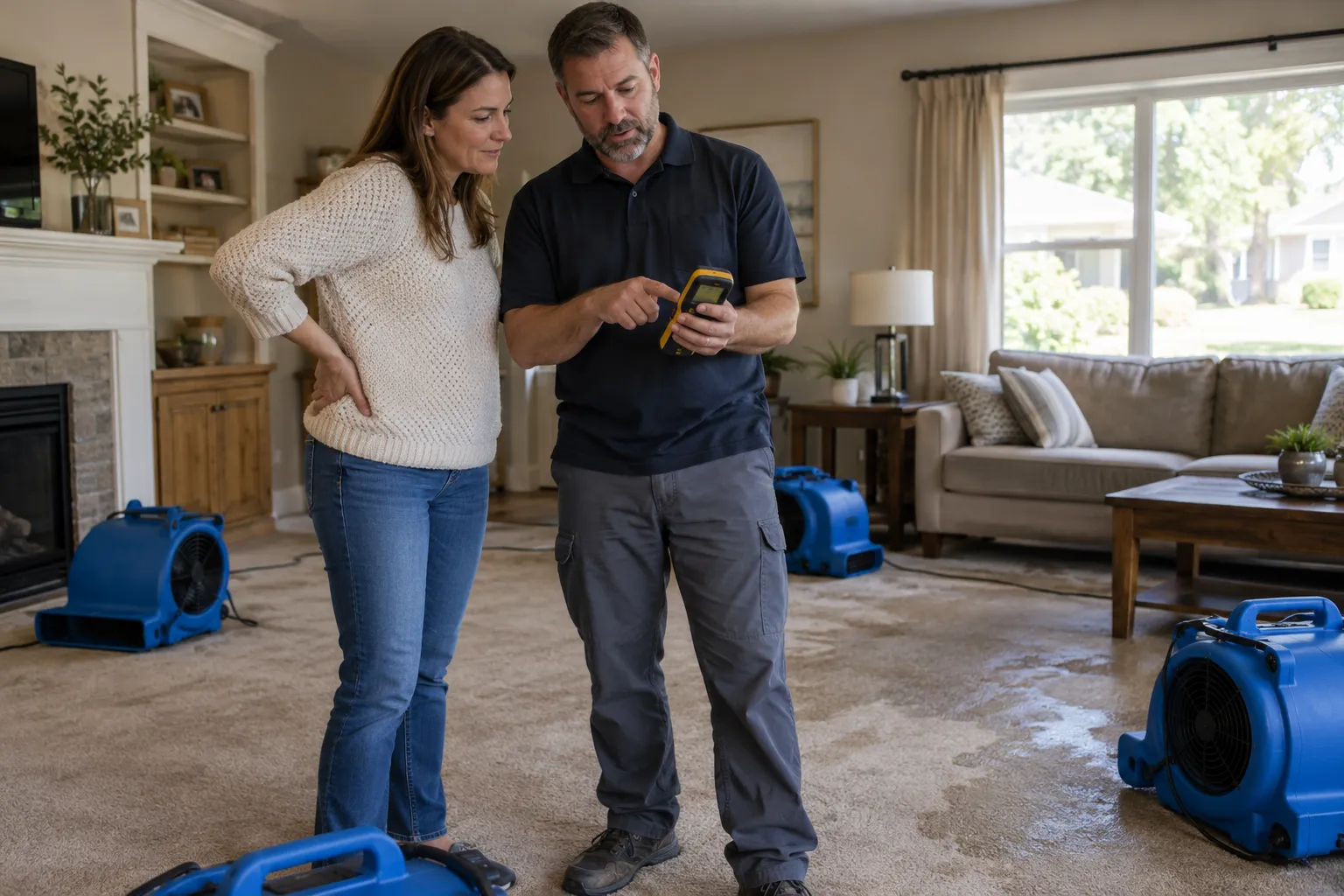
Think of a spilled drink on a table. Before wiping, you look at how far it spread. A provider does the same. They check where the water came from, how far it traveled, and which materials are wet. Moisture meters help find hidden dampness. Then they explain the plan, and you can compare it with other estimates before choosing anything.
How fast do I need to act after a leak or flood?
Water works like a spill on a sponge. It keeps soaking in the longer it sits. Within the first day or two, drywall and carpet padding can stay wet deep inside. After a few days, mold can begin in warm, humid weather. Many providers can respond quickly, so Request a callback to check provider availability, or send the estimate form.
How much does water damage restoration usually cost?
Costs vary a lot by job. In the U.S., a small, clean-water cleanup may run a few hundred dollars up to a couple thousand. Larger floods, sewage, or wet structural materials can cost several thousand more. Size of the area, type of water, and drying time all matter. Always ask for a written quote that lists what is included before you agree.
Will my homeowners insurance pay for water damage?
It depends on your policy and on the cause. Some policies may cover sudden damage, like a burst pipe, while slow leaks and rising flood water are often treated differently. Check your policy or ask your insurer. Providers can often help document damage with photos and notes, which may support a claim. Nobody can promise coverage in advance.
Is it safe to stay in my home while it is wet?
Sometimes, but not always. Standing water near outlets, cords, or appliances can be an electrical risk, so stay out of those areas and ask a professional about power. Water from sewage or outdoor flooding may carry germs. Wet floors are slippery too. If you are unsure, step outside and ask a provider what is safe.
What is water extraction, and why does it come before drying?
Water extraction means pulling standing water out with pumps and strong vacuums. It is like wringing out a soaked towel before hanging it up. If you skip that step, drying takes much longer. After extraction comes structural drying, where fans and dehumidifiers pull moisture out of walls, floors, and framing. Dry before rebuilding.
How long does structural drying take?
Most drying takes a few days, though it can be shorter or longer. Thick materials like subfloors and framing hold water the way a dense loaf of bread does, so they release it slowly. Humid summer air in our region can slow the process too. A provider checks moisture readings each visit and tells you when things are truly dry.
How do I compare estimates without feeling pressured?
Lay the quotes side by side, like comparing recipes. Look at what work is listed, how drying is checked, and what could change the price. A very low number may leave things out. You can ask questions, wait a day, and request more than one estimate. Requesting an estimate through Ruinedrangers Restoration carries no obligation.
Request a callback
Tell us what happened and where. Request an estimate and a local provider in our network will follow up. There is no obligation to hire.
No obligation