Flooded Basement Cleanup in Knoxville
Request an estimate from local providers
A flooded basement can feel overwhelming, but it follows a pattern. Water soaks into concrete, wood and drywall the way a spill soaks into a paper towel. The longer it sits, the farther it spreads. This page explains what happens hour by hour, so you know what matters first and what can wait.
Ruinedrangers Restoration is a referral service. We do not do the cleanup. We connect homeowners in the Greater Knoxville area with independent local providers who handle water extraction, structural drying and sanitizing. You can request an estimate, compare your options at your own pace, and decide with no obligation.
Flooded basement? Start with safety
Standing water and electricity are a risky mix. Think of a puddle around a plugged-in hair dryer. You would not step in. A basement works the same way.
Stay out if water is near outlets, a panel or plugged-in appliances. Do not turn power off by touching anything wet. A licensed electrician or your utility can help with that. Storm water can also carry sewage and dirt, so avoid wading in without proper boots and gloves.
Read the clock: the first hour
In the first hour, water is mostly sitting on the surface. It is like a spilled drink on a table. It is easy to wipe up if you reach it quickly, but it begins to soak in right away.
This is the time to stop the source if you can, move the safest items upward, and take photos. Photos help later if you talk with your insurer.
The first day: water moves into materials
By the end of the first day, the water has moved into the carpet pad, the bottom of the walls and any cardboard boxes. It is acting like a sponge, pulling moisture upward through porous materials.
This is why many providers want to start water extraction early. Pulling out standing water first gives the drying step a smaller job.
Days two and three: humidity takes over
Once the puddles are gone, the air itself holds the moisture. In hot, humid weather, a closed basement can stay damp for a long time. Damp air, wood and paper are what mold likes.
Mold can begin to grow in a few days under the right conditions. That does not mean every wet basement gets mold. It means damp spots are worth taking seriously.
After the first week: bigger repairs
If materials stay wet for a week or more, more of them may need to be removed instead of dried. Drywall can crumble, wood can swell, and odors can settle in. Fast drying often keeps the job smaller.
Find out where the water came from
The source decides the plan. A burst pipe brings clean water. Storm runoff brings dirt. A backed-up drain brings sewage, which needs stronger cleaning and more careful handling.
Common sources in this region include heavy thunderstorms, runoff from tropical systems, a failed sump pump, a cracked foundation wall and a leaking water heater. Tell the provider what you saw. It helps them plan.
Why the source matters for cleanup
Clean water can often be dried in place. Water from outside or from drains is usually treated as contaminated, so soft items like carpet and padding often get removed. A provider will explain which type they think you have and why.
What flooded basement cleanup includes
The exact steps vary by provider and by job. Most cleanups follow the same general path.
- Pumping out standing water
- Removing soaked carpet, padding and damaged drywall
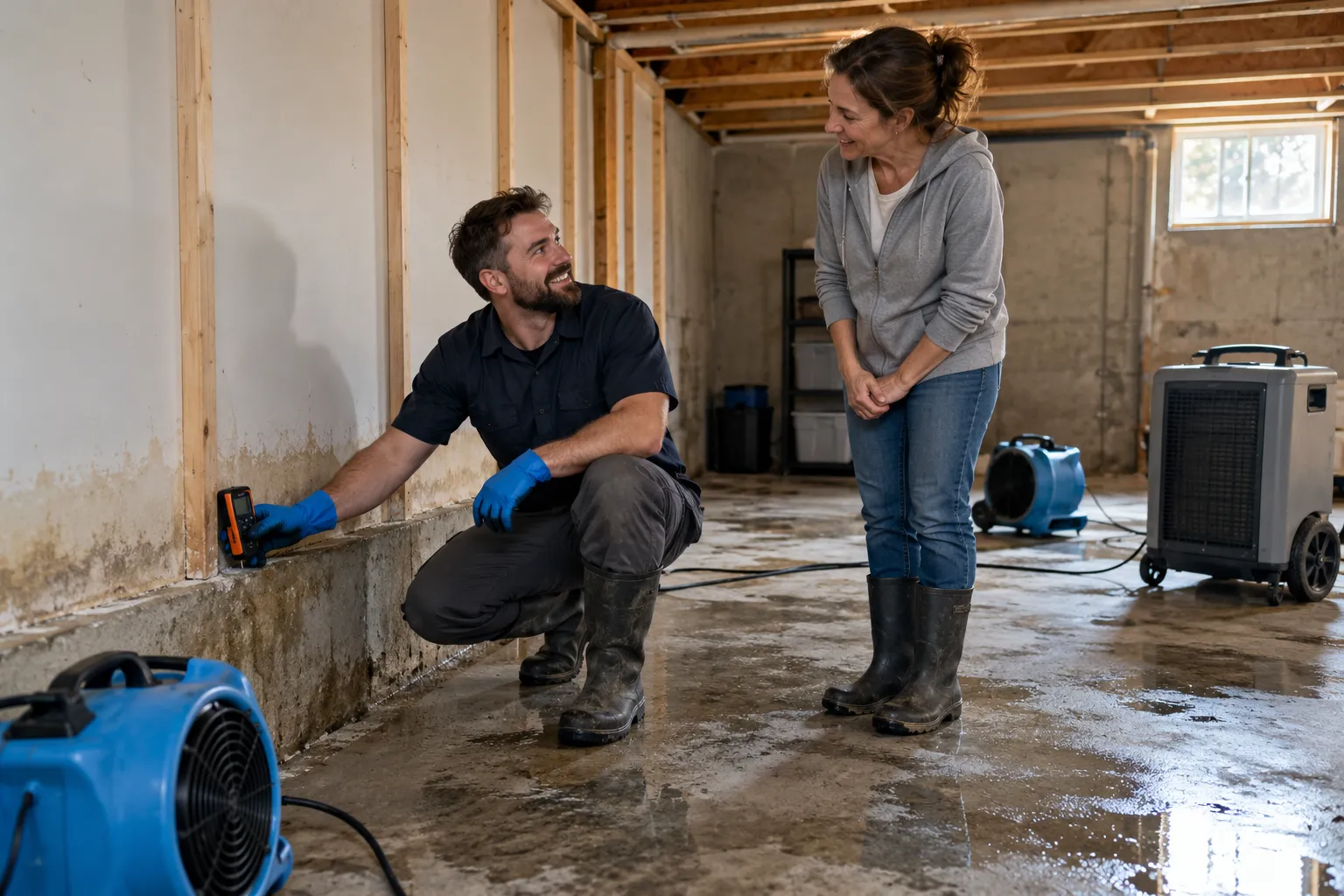
- Drying the structure with fans and dehumidifiers
- Cleaning and sanitizing hard surfaces
- Checking moisture levels before the job is called done
Water extraction: the first big step
Extraction uses pumps and wet vacuums to pull out water. Think of it as wringing out the sponge before you set it in the sun. Doing this first makes everything after it faster.
Structural drying: dry before rebuilding
Structural drying is slower and quieter. Air movers push air across wet surfaces, and dehumidifiers pull moisture out of the air. Providers often use meters to check wood and concrete, because surfaces can feel dry while still holding water inside.
Dry before rebuilding. New drywall over damp framing can trap moisture and cause trouble later.
Finished vs. unfinished basements
An unfinished basement with bare concrete is like a plastic bowl. Water sits on it and can be removed with less damage. A finished basement is more like a layered cake. Carpet, padding, drywall and insulation all hold water, and each layer may need to be opened up.
Homes here include slab foundations, crawl spaces and older houses with deep basements. Each one dries a little differently, so ask the provider how they plan to handle yours.
Your belongings
Sort items into three piles: dry, damp and soaked. Hard items like metal tools and plastic bins can often be cleaned. Upholstery, mattresses and cardboard that sat in water are harder to save. Keep photos and a list of what you toss.
Papers and photos can sometimes be dried carefully. Ask the provider what they can help with.
Compare, then decide
No one has to say yes on the first visit. Request estimates and look at them side by side. A lower number may leave out drying checks. A higher number may include more equipment or more days. Neither is automatically right.
Ask each provider to write down what is included. Then pick the one that makes sense for your home and budget.
Questions to ask the provider
- What do you think caused this water, and how will it change the plan?
- How will you check that everything is dry?
- What gets removed, and what stays?
- Can you help document the damage for an insurance claim?
- What could add to the estimate?
Request a callback to check provider availability if you would rather talk it through.
After the cleanup
When the basement is dry, you can plan repairs. Many homeowners add a sump pump, a battery backup or better grading outside. Ask the provider what they noticed about how water got in. Some policies may cover sudden damage, so check your policy and keep your records handy.
What's Included
Standing water pump-out
Pumps and wet vacuums pull water from the floor so drying can begin sooner.
Wet material removal
Soaked carpet, padding and damaged drywall are taken out before they hold moisture longer.
Structural drying
Air movers and dehumidifiers draw moisture out of framing, concrete and the basement air.
Cleaning
Hard surfaces are cleaned and sanitized, with extra care for storm or sewage water.
What flooded basement cleanup may cost
Prices depend on the depth of water, the source, the size of the space and what is inside. These are typical U.S. ranges. Always get a written quote.
| Item | Typical range | Notes |
|---|---|---|
| Water extraction | $300 – $2,500 | Depends on water depth and basement size |
| Drying equipment | $800 – $3,000 | Based on the number of units and days needed |
| Carpet and pad removal | $500 – $2,500 | Higher for large finished areas |
| Wet drywall removal | $1,000 – $4,000 | Varies by how high the water reached |
| Cleaning and sanitizing | $0.50 – $2 per sq ft | Contaminated water usually costs more |
| Mold testing | $300 – $1,000 | Only needed if mold is suspected |
How It Works
Stay safe first
Keep out of standing water near power, stop the source if you safely can, and take photos.
Request an estimate online
Tell us about the water, the source and the space, and local providers can respond.
Compare, then decide
Review written estimates side by side and ask questions until the plan makes sense to you.
Cleanup and drying
The provider you choose removes the water, dries the structure and checks moisture levels.
Why Call Ruinedrangers Restoration
Clear plain-language guidance
The site explains each stage of the damage clock so you know what you are deciding.
Local providers
You are connected with independent providers who serve homes in your area, not far-away crews.
Compare options
Request estimates, read them side by side and take the time you need to decide.
No pressure
Asking for an estimate carries no obligation, and every choice stays with you the homeowner.
Other Services
Need flooded basement cleanup in Knoxville?
Tell us what happened and where. Request an estimate and a local provider in our network will follow up. There is no obligation to hire.
No obligationFlooded Basement Cleanup FAQ
What should I do first when my basement floods?
Stay out if water is near outlets or appliances, and do not touch the electrical panel with wet hands. Stop the source if it is safe, take photos of the damage, and move dry items upward. Then request an estimate from a local provider.
How long does it take to dry a flooded basement?
Many basements need several days of drying, though it varies with the amount of water, the materials and the humidity. A provider will usually check moisture levels with meters before saying the space is dry.
Will insurance pay for flooded basement cleanup?
It depends on your policy and the cause. Some policies may cover sudden damage, while flood from rising outside water often needs separate coverage. Check your policy, and ask providers to help document the damage for a claim.
We service you here
Request a callback
Tell us what happened and where. Request an estimate and a local provider in our network will follow up. There is no obligation to hire.
No obligation