Water Damage Restoration for Knoxville Homeowners
Request an estimate, no obligation
Water damage is a slow chain of events that starts the moment water leaves its pipe, roof, or appliance. Wet materials swell, soak up moisture, and then pass it along to dry areas nearby. Knowing the order of that chain makes the next steps easier to understand.
Ruinedrangers Restoration is a referral service. We explain the timeline in plain words and connect you with independent providers in our network who handle water extraction, structural drying, and rebuilding. The providers do the work. You compare estimates, ask questions, and decide at your own pace. This page walks through what happens from the first hour to the first week, and what each stage means for your home in Knoxville.
Water in the House? Start Here
If water is spreading right now, stay safe first. Stop the source if you can. That might be a shutoff valve under a sink, behind a toilet, or at the main line.
Stay out of standing water near outlets and cords. Turn off power to a wet area only if the panel is dry and you can reach it safely. Then take photos and short videos of everything you see. Photos help later, when you talk with a provider or your insurer.
After that, you can ask for an estimate from a local provider in our network. Asking does not commit you to anything.
The First Hours: Water Moves Fast
Think of a dry sponge touching a spilled drink. The sponge pulls the liquid up and spreads it far past the spill. Your drywall, wood trim, and carpet pad do the same thing.
In the first hours, water runs down to the low point of the floor, seeps under baseboards, and climbs into the bottom of walls. Furniture legs leave stains. Carpet and pad soak through. This is the stage where removing the water itself matters most, because less water means less to dry later.
Many providers can respond quickly, but availability varies. Request a callback to check provider availability if you would rather talk it through.
The First Day: Water Extraction
Water extraction means pulling standing and trapped water out of the building. Providers use pumps and strong wet vacuums for this. Extra water might also be lifted out of carpet, pad, and dips in the floor.
This step comes before any drying. Trying to dry a room that still holds puddles is like trying to dry a bath towel by holding it near a fan while it still drips.
Days Two and Three: Moisture Settles In
Once the visible water is gone, the hidden part remains. Moisture sits inside wall cavities, under cabinets, and in subfloors. In hot, humid weather, the air itself is already damp, so surfaces dry more slowly.
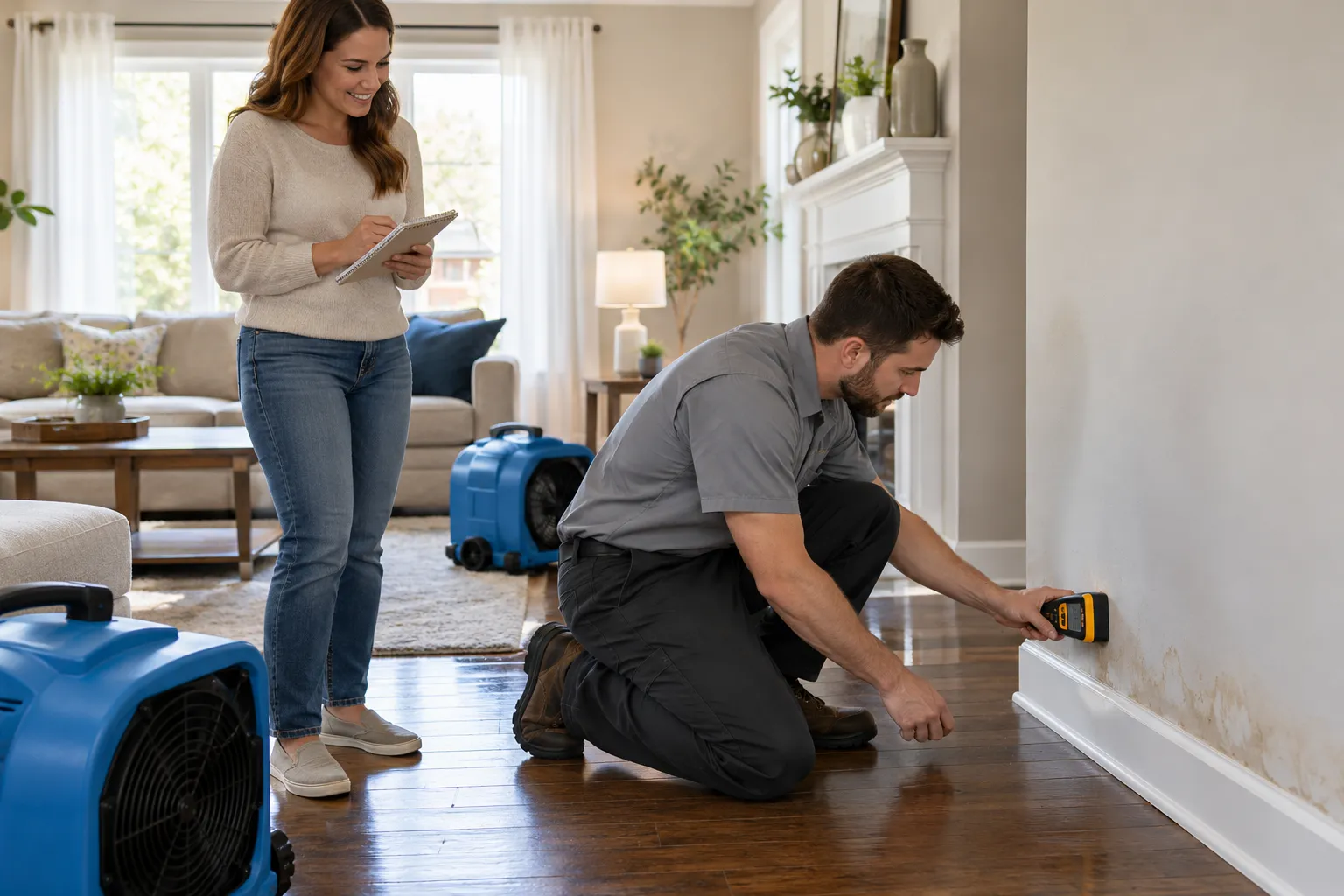
This is when structural drying begins. Providers place air movers and dehumidifiers and often use moisture meters to track progress. The goal is to bring wood, drywall, and concrete back to their normal moisture level, not just to make them feel dry.
Days Four Through Seven: Mold Gets a Chance
Mold spores are already floating in most homes. They need moisture and time to grow. After a few days of damp materials, growth can start, especially in dark places like crawl spaces and behind baseboards.
That is why timing changes the outcome. A room that dries in a few days may need only cleaning. A room that stays wet for a week may need parts removed and replaced.
Week Two and Beyond: Hidden Damage Shows Up
Some damage appears late. Floors cup or buckle. Paint bubbles. A musty smell lingers. Nails rust and trim loosens. Slab homes can trap moisture under flooring, while crawl-space homes can hold it in insulation and joists.
None of this means all is lost. It means older, slower damage often costs more to fix than damage caught early.
Types of Water and Why They Matter
Providers sort water into three broad groups. Clean water comes from a supply line or a tidy pipe break. Gray water comes from washing machines or dishwashers. Black water comes from sewage or rising flood water and carries germs.
Clean water can turn into gray water if it sits long enough. Black water usually means porous items, like carpet and drywall, are removed instead of dried. Ask the provider which type they think you have, and why.
Working With Your Insurance
Some policies may cover sudden damage, like a burst pipe, while slow leaks and flooding are often treated differently. Check your policy and call your insurer's claim line early.
Providers can often help document damage for a claim with photos, moisture readings, and written notes. Keep your own records too, along with receipts for anything you buy.
Compare, Then Decide
A calm comparison beats a rushed signature. If you can, gather two or three written estimates. Line them up side by side, like grocery receipts, and check that each one describes the same work.
Look for these items:
- Which rooms and materials are included
- What drying equipment will be used and for how long
- Whether moisture readings will be shared with you
- What is removed, and what is only cleaned
- How rebuilding is handled and priced
A very short estimate with one big number is hard to compare. A clear list is easier to trust.
Questions Worth Asking a Provider
Ask if they are licensed and insured where your state requires it. Ask how they will check that the home is truly dry. Ask who handles the rebuild, and whether that is priced separately.
You can say no, ask for time, or get another opinion. A fair provider will understand. Ruinedrangers Restoration does not do the work and does not choose for you.
Dry Before Rebuilding
Rebuilding too early is like painting a wall that is still damp. It may look fine for a while, then the problem returns under the new finish. A good order is extract, dry, check readings, then rebuild.
Storms, tropical rain, and ice storms can all bring water into homes around the Greater Knoxville area. Whatever the cause, the same clock applies. Read the clock, compare, then decide.
What's Included
Water Extraction
Pumps and strong vacuums pull standing and trapped water from floors, carpet, and low spots before drying begins.
Structural Drying
Air movers and dehumidifiers bring walls, floors, and framing back to normal moisture.
Damage Documentation
Photos, moisture readings, and notes that can help when you talk with your insurer.
Cleanup and Rebuild
Removal of ruined materials, cleaning, and repairs that return the room to normal use.
Typical Water Damage Restoration Costs
Prices depend on how much water there is, what type it is, and how long it sat. These are typical U.S. ranges only. Always get a written quote that lists exactly what is included.
| Item | Typical range | Notes |
|---|---|---|
| Small cleanup, one room | $400 – $1,500 | Caught early, clean water, little removal |
| Water extraction | $500 – $2,500 | Depends on depth and floor area |
| Structural drying equipment | $1,000 – $5,000 | Based on days of drying and number of units |
| Drywall and insulation removal | $1,000 – $4,000 | Needed when walls stay wet too long |
| Flooring replacement | $2,000 – $8,000 | Varies by material and room size |
| Multi-room restoration and rebuild | $8,000 – $30,000 | Larger losses, black water, or hidden damage |
How It Works
Make the Area Safe
Stop the water source if possible, avoid wet outlets, and take photos of the damage.
Request an Estimate
Tell us what happened and a local provider in our network will reach out.
Compare, Then Decide
Review written estimates side by side and ask questions before choosing.
Extract, Dry, and Rebuild
The provider removes water, dries the structure, checks readings, then repairs.
Why Call Ruinedrangers Restoration
Timeline First
We explain what happens hour by hour so you can judge how urgent your situation really is.
Plain Words
No jargon walls. Each step is explained in everyday language.
Independent Providers
Local providers in our network do the work, and you can compare their estimates.
No Pressure
You decide at your own pace, and asking for an estimate carries no obligation.
Other Services
Need water damage restoration in Knoxville?
Tell us what happened and where. Request an estimate and a local provider in our network will follow up. There is no obligation to hire.
No obligationWater Damage Restoration FAQ
How fast does water damage get worse?
Water spreads within minutes, and materials start absorbing moisture right away. Within a couple of days, mold can begin in damp areas. Faster drying usually means less removal and a smaller repair.
Can I just use fans and dry the house myself?
For a tiny spill on a hard floor, maybe. For wet walls, carpet pad, or subfloors, household fans rarely reach hidden moisture. A provider can measure it and tell you.
Will my homeowners insurance pay for water damage?
Some policies may cover sudden damage, like a burst pipe. Flooding and slow leaks are often handled differently. Check your policy and ask your insurer before you file.
We service you here
Request a callback
Tell us what happened and where. Request an estimate and a local provider in our network will follow up. There is no obligation to hire.
No obligation